





How to Compare Digital Identity Wallet Development Companies

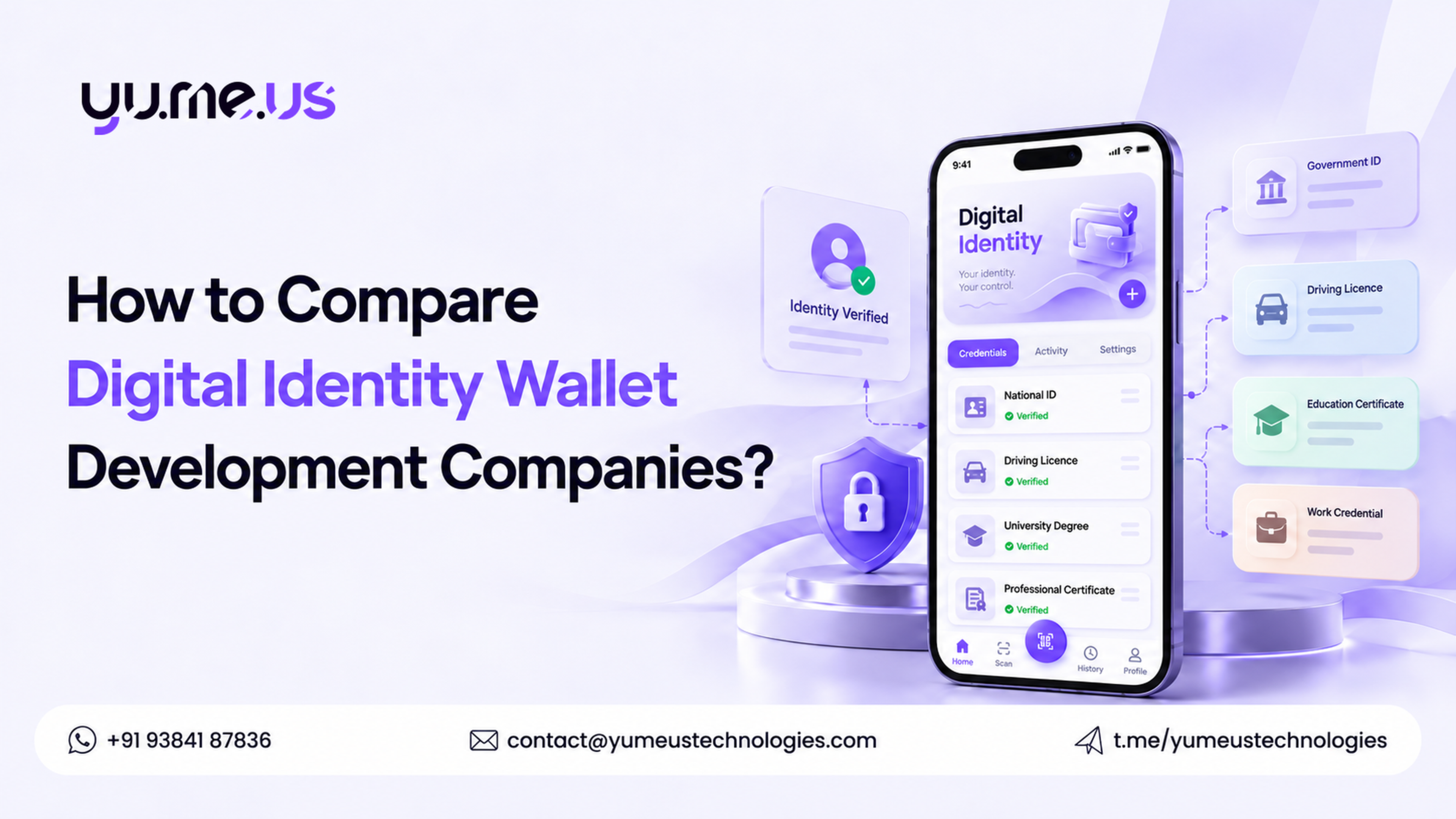
<p>People no longer want to hand over passwords, scanned passports, or birth certificates every time they sign up for a service. They want control. Businesses, meanwhile, want fewer breaches and faster onboarding.</p><p>That is where decentralized identity wallet development enters the picture. Choosing the right partner, however, takes more than a glance at a portfolio page. In this guide, we walk you through a practical method to compare vendors, ask sharper questions, and avoid costly missteps.</p><p><strong>Key Takeaways</strong></p><ul><li><p>Shortlist vendors by proven standards expertise, not by sales polish.</p></li><li><p>Judge security architecture before you judge price.</p></li><li><p>Ask for live demos, audit reports, and client references.</p></li><li><p>Budget for compliance, maintenance, and upgrades, not only the first build.</p></li><li><p>Pick a partner who explains trade-offs plainly.</p></li></ul><h2><strong>What Is Digital Identity Wallet Development?</strong></h2><p>Digital identity wallet development is the process of designing and building an application that stores, manages, and shares verified credentials. Think driver's licenses, university degrees, employee badges, or KYC attestations, all living in one secure place on a user's device.</p><p>The wallet itself is only the visible layer. Beneath it sit cryptographic key management, credential issuance flows, verification protocols, and revocation registries. A well-built wallet lets users prove <em>who they are</em> without exposing <em>everything about them</em>.</p><p>A decentralized identity wallet goes one step further. No central database holds the user's identity. Instead, the individual controls their own keys and decides precisely which claims to disclose.</p><h2><strong>Why Should Businesses Compare Digital Identity Wallet Development Companies?</strong></h2><p>Not every vendor is equal. Some firms have shipped dozens of credential systems. Others have simply rebranded a generic crypto wallet and added a login screen.</p><p>A careful comparison protects you in three ways:</p><ul><li><p><strong>Risk reduction:</strong> Weak key handling can expose users and your brand.</p></li><li><p><strong>Budget control:</strong> Clear scoping prevents surprise change orders.</p></li><li><p><strong>Speed to market:</strong> Experienced teams reuse tested components and ship sooner.</p></li></ul><p>Moreover, regulation is tightening across the USA, UAE, Singapore, Brazil, Turkey, and Norway, among other markets. A vendor unfamiliar with regional rules can leave you rebuilding later. Therefore, comparison is not a formality. It is your first line of defense.</p><h2><strong>What Features Should a Digital Identity Wallet Include?</strong></h2><p>Before you rate any company, define what a good product looks like. A <strong>secure digital application</strong> for identity should include the following.</p><h3><strong>Core features</strong></h3><ul><li><p>Biometric and PIN-based authentication</p></li><li><p>Hardware-backed key storage (secure enclave or equivalent)</p></li><li><p>Support for Decentralized Identifiers (DIDs) and verifiable credentials</p></li><li><p>QR code and NFC credential exchange</p></li><li><p>Encrypted backup and social or device-based recovery</p></li></ul><h3><strong>Advanced features</strong></h3><ul><li><p>Selective disclosure and zero-knowledge proofs</p></li><li><p>Credential revocation and expiry checks</p></li><li><p>Multi-language and accessibility support</p></li><li><p>Offline verification for low-connectivity regions</p></li><li><p>Admin dashboards for issuers and verifiers</p></li></ul><p>If a vendor cannot explain how each item works, treat that as a signal. Features listed on a brochure mean little without technical depth behind them.</p><h2><strong>How Do Decentralized Identity and Digital Wallets Work Together?</strong></h2><p>It helps to picture three roles: the issuer, the holder, and the verifier. An issuer, such as a bank or a university, signs a credential. The holder stores it in the wallet. A verifier then requests proof, and the holder shares only what is needed.</p><p>This is the heart of decentralized identity and digital wallets. The wallet acts as the holder's agent. Meanwhile, DIDs act as globally unique, self-owned identifiers anchored to a ledger or a similar trust registry.</p><p>In practice, a decentralized identity management system replaces the old model of siloed accounts. Users no longer create a new profile for each service. Instead, they present reusable, cryptographically verifiable proofs.</p><p>The result? Fewer passwords, fewer data silos, and far fewer honeypots for attackers. Digital identity wallets and decentralized identity, in short, form a single trust fabric.</p><h2><strong>How to Evaluate a Company's Decentralized Identity Development Expertise</strong></h2><p>Claims are cheap. Evidence is not. Use the checklist below to separate genuine specialists from generalists.</p><h3><strong>Standards fluency</strong></h3><p>Ask which specifications the team has implemented. Look for W3C DID Core, Verifiable Credentials, OpenID for Verifiable Credentials (OID4VC), and DIDComm. Familiarity with eIDAS 2.0 and ISO 18013-5 is a strong plus.</p><h3><strong>Proof of delivery</strong></h3><p>Request case studies with measurable outcomes. Better still, ask to speak with a past client. A confident firm will agree without hesitation.</p><h3><strong>Security posture</strong></h3><p>Check for third-party penetration tests, code audits, and secure SDLC practices. Additionally, ask how the team handles key recovery, because that single feature often decides whether a wallet is usable or abandoned.</p><h3><strong>Team depth</strong></h3><p>A capable decentralized wallet development company employs cryptographers, mobile engineers, backend architects, and compliance advisors. If the roster shows only front-end developers, look elsewhere.</p><p><em>"Identity is the one system you cannot afford to prototype carelessly."</em></p><h2><strong>How Can You Integrate Decentralized Identity Into an App?</strong></h2><p>Many teams ask how to integrate decentralized identity into an app without rebuilding everything. Fortunately, a phased approach works well.</p><ol><li><p><strong>Discovery:</strong> Map user journeys, credential types, and trust relationships.</p></li><li><p><strong>Architecture:</strong> Choose a DID method, a ledger or registry, and a credential format.</p></li><li><p><strong>SDK integration:</strong> Embed wallet and verification libraries into your existing mobile or web stack.</p></li><li><p><strong>Issuer and verifier setup:</strong> Connect your back end so it can sign and check credentials.</p></li><li><p><strong>Testing and audit:</strong> Run interoperability tests against other wallets and verifiers.</p></li><li><p><strong>Launch and monitor:</strong> Roll out to a pilot group first, then scale.</p></li></ol><p>A competent vendor will present this roadmap early. Furthermore, they will flag integration risks, such as legacy authentication systems, before they become blockers.</p><h2><strong>How Much Does Digital Identity Wallet Development Cost?</strong></h2><p>Prices vary widely. Scope, security depth, and compliance needs drive most of the spread. Treat the figures below as rough, directional ranges rather than quotes.</p><table style="min-width: 75px;"><colgroup><col style="min-width: 25px;"><col style="min-width: 25px;"><col style="min-width: 25px;"></colgroup><tbody><tr><th colspan="1" rowspan="1"><p><strong>Project tier</strong></p></th><th colspan="1" rowspan="1"><p><strong>Typical scope</strong></p></th><th colspan="1" rowspan="1"><p><strong>Indicative range (USD)</strong></p></th></tr><tr><td colspan="1" rowspan="1"><p>Basic</p></td><td colspan="1" rowspan="1"><p>Single credential type, one platform</p></td><td colspan="1" rowspan="1"><p>$30,000 – $60,000</p></td></tr><tr><td colspan="1" rowspan="1"><p>Mid-range</p></td><td colspan="1" rowspan="1"><p>Multi-credential, iOS and Android, DID support</p></td><td colspan="1" rowspan="1"><p>$60,000 – $150,000</p></td></tr><tr><td colspan="1" rowspan="1"><p>Enterprise</p></td><td colspan="1" rowspan="1"><p>Custom protocols, audits, regulatory integrations</p></td><td colspan="1" rowspan="1"><p>$150,000+</p></td></tr></tbody></table><p>The <a target="_blank" rel="noopener noreferrer nofollow" class="" href="https://www.yumeustechnologies.com/blog/crypto-exchange-development-cost">cost to develop a crypto exchange</a> tends to be lower than an identity wallet, because identity projects add credential logic, revocation, and compliance layers.</p><p>Also budget for ongoing items:</p><ul><li><p>Security audits and penetration testing</p></li><li><p>Infrastructure and node hosting</p></li><li><p>Standards updates and OS compatibility patches</p></li><li><p>Support and user education</p></li></ul><p>Be wary of unusually low bids. In this field, a bargain often hides missing security work.</p><h2><strong>What Should You Ask Before Hiring Digital Identity Wallet Developers?</strong></h2><p>When you hire digital identity wallet developers, a structured interview saves months of regret. Consider these questions.</p><ul><li><p>Which DID methods and credential formats have you shipped?</p></li><li><p>How do you protect private keys on-device and in recovery flows?</p></li><li><p>Can you show an independent audit report?</p></li><li><p>Who owns the source code and intellectual property?</p></li><li><p>How do you handle GDPR, eIDAS, or regional data rules?</p></li><li><p>What does your post-launch support model look like?</p></li><li><p>How will you ensure interoperability with other wallets?</p></li></ul><p>Listen closely to the answers. Specific, candid replies indicate maturity. Vague ones suggest the opposite.</p><h2><strong>How Do Digital Identity Wallets Differ From Crypto Wallets?</strong></h2><p>The two share cryptographic foundations, yet their purposes diverge sharply.</p><table style="min-width: 75px;"><colgroup><col style="min-width: 25px;"><col style="min-width: 25px;"><col style="min-width: 25px;"></colgroup><tbody><tr><th colspan="1" rowspan="1"><p><strong>Aspect</strong></p></th><th colspan="1" rowspan="1"><p><strong>Crypto wallet</strong></p></th><th colspan="1" rowspan="1"><p><strong>Digital identity wallet</strong></p></th></tr><tr><td colspan="1" rowspan="1"><p>Primary purpose</p></td><td colspan="1" rowspan="1"><p>Hold and move digital assets</p></td><td colspan="1" rowspan="1"><p>Hold and present verified credentials</p></td></tr><tr><td colspan="1" rowspan="1"><p>Core data</p></td><td colspan="1" rowspan="1"><p>Private keys, token balances</p></td><td colspan="1" rowspan="1"><p>DIDs, verifiable credentials</p></td></tr><tr><td colspan="1" rowspan="1"><p>Trust model</p></td><td colspan="1" rowspan="1"><p>Blockchain consensus</p></td><td colspan="1" rowspan="1"><p>Issuer signatures and trust registries</p></td></tr><tr><td colspan="1" rowspan="1"><p>Privacy focus</p></td><td colspan="1" rowspan="1"><p>Pseudonymous transactions</p></td><td colspan="1" rowspan="1"><p>Selective disclosure of attributes</p></td></tr><tr><td colspan="1" rowspan="1"><p>Regulation</p></td><td colspan="1" rowspan="1"><p>Financial and AML rules</p></td><td colspan="1" rowspan="1"><p>Data protection and eID frameworks</p></td></tr></tbody></table><p>That said, overlap exists. A DSR Wallet-style architecture, where the user alone controls the keys, borrows heavily from crypto wallet design. Consequently, a vendor with a strong <a target="_blank" rel="noopener noreferrer nofollow" class="" href="https://www.yumeustechnologies.com/crypto-wallet-development-company">crypto wallet development company</a> background can transition well, provided they also grasp credential standards.</p><p>Similarly, firms offering <a target="_blank" rel="noopener noreferrer nofollow" class="" href="https://www.yumeustechnologies.com/cryptocurrency-exchange-development-company">crypto exchange development services</a> bring useful experience in security and compliance. However, exchange expertise alone does not equal identity expertise.</p><h2><strong>How Can Businesses Choose the Right Digital Identity Wallet Development Partner?</strong></h2><p>By now, you hold a long list of criteria. Turn it into a scorecard.</p><h3><strong>Build a weighted scorecard</strong></h3><p>Assign weights to each factor, for example:</p><ul><li><p>Technical expertise and standards: 30%</p></li><li><p>Security and audit record: 25%</p></li><li><p>Domain and regulatory experience: 20%</p></li><li><p>Communication and transparency: 15%</p></li><li><p>Pricing and commercial terms: 10%</p></li></ul><h3><strong>Run a paid pilot</strong></h3><p>Rather than committing to a full build, fund a small proof of concept. It reveals how the team communicates, estimates, and solves problems under real conditions.</p><h3><strong>Verify the long game</strong></h3><p>Ask about roadmap alignment. The ideal partner offers custom digital identity wallet development solutions and keeps pace with evolving standards. Ultimately, you are choosing a collaborator for years, not a contractor for weeks.</p><h2><strong>Why Consider Yumeus Technologies for Crypto Wallet Development Services?</strong></h2><p>Yumeus Technologies combines blockchain engineering with a security-first mindset. Our teams build digital identity wallet solutions that balance usability, privacy, and regulatory readiness.</p><p>Here is what clients typically value:</p><ul><li><p>End-to-end Decentralized Identity (DID) development, from architecture to launch</p></li><li><p>Custom wallets tailored to industry workflows</p></li><li><p>Standards-based, interoperable builds</p></li><li><p>Transparent scoping and milestone-based delivery</p></li><li><p>Ongoing support after go-live</p></li></ul><p>We serve organizations across the USA, UAE, Singapore, Vietnam, Turkey, the Philippines, Brazil, Thailand, South Korea, Indonesia, and Norway. As a result, we understand how local requirements shape product decisions.</p><p>Whether you need a pilot or a full-scale decentralized identity implementation, we are ready to scope it with you.</p><h2><strong>Conclusion</strong></h2><p>Comparing vendors is a disciplined exercise. Start with clear requirements. Then test expertise, scrutinize security, and weigh cost against long-term value.</p><p>A strong partner will not rush you. Instead, they will explain trade-offs, show evidence, and welcome tough questions. That attitude predicts how the project itself will unfold.</p><p>If you are ready to move forward, Yumeus Technologies can help you design, build, and scale a wallet your users will trust.</p><h2><strong>FAQ</strong></h2><h3><strong>What is decentralized identity wallet development?</strong></h3><p>It is the creation of an application that lets users own, store, and share verifiable credentials without relying on a central identity database.</p><h3><strong>How long does it take to build a digital identity wallet?</strong></h3><p>A basic wallet may take three to four months. Complex enterprise builds can run six to twelve months, depending on integrations and audits.</p><h3><strong>Do I need blockchain for a digital identity wallet?</strong></h3><p>Not always. Many designs use a blockchain or ledger as a trust registry for DIDs. Others rely on alternative registries. The right choice depends on your use case.</p><h3><strong>Is a digital identity wallet secure?</strong></h3><p>Yes, when built correctly. Hardware-backed key storage, strong encryption, and regular audits keep credentials protected.</p><h3><strong>Can an existing app support decentralized identity?</strong></h3><p>Yes. With SDKs and a phased plan, you can integrate decentralized identity into an app without a full rebuild.</p><h3><strong>What makes a good decentralized wallet development company?</strong></h3><p>Look for standards expertise, audited security practices, relevant case studies, and clear communication.</p>